Nietzsche's Favorite PC Games
A long Nietzsche PC game tier list, with must plays, respected nightmares, and instant uninstall bait.
TL;DR
- Nietzsche plays games that expose excuses.
- Disco Elysium and Souls sit at the top.
- Empty grind gets deleted fast.
The list begins with a suspicious mouse click
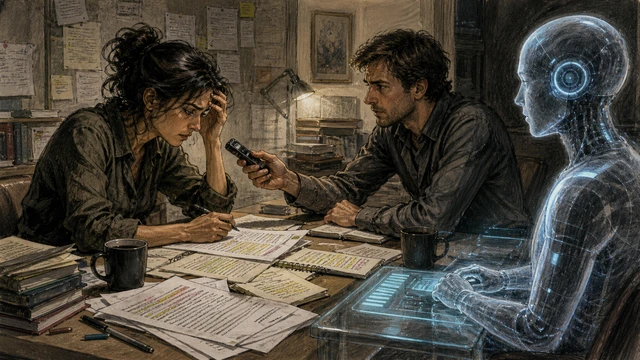
Nietzsche would not open a PC game library like a relaxed customer browsing discounted pixels. He would examine it like a doctor reading a fever chart. Every icon would be a confession. Every save file would smell faintly of appetite, fear, discipline, vanity, and the little theater a player builds around losing.
So this is not a polite museum shelf. It is a ranked diagnosis. Some games would pull him in for a hundred hours because they test will, guilt, repetition, authority, power, and self invention. Some would earn his respect but not his love. A few would make him close the launcher with the facial expression of a man who has found candy inside a philosophy department.
A favorite game is not the one that comforts the player. It is the one that catches the player negotiating with weakness.
Dr. Helena Savefile, Department of Applied Nihilism
”The ranking system has teeth
The shelves are simple. Nietzsche does not need a spreadsheet with thirty eight categories. He needs four verdicts and one eyebrow.
- Definitely plays it, because the game puts pressure on the soul and refuses to babysit the player.
- Loves it, but complains theatrically, because the game is too accurate about human ugliness.
- Respects it, but would not keep it installed, because the idea is stronger than the daily appetite.
- Deletes it fast, because it turns the player into a decorated reward loop.
That last shelf matters. Nietzsche would not hate fun. He would hate fun pretending to be destiny.
Disco Elysium would be installed first
Verdict, definitely plays it. Then he loses a weekend and pretends it was research.
Disco Elysium would hit him straight in the philosophical ribs. A detective wakes up ruined, hears his own brain arguing like a committee of drunk prophets, and tries to solve a murder while every sentence exposes another basement under the personality. Nietzsche would adore that. The game treats identity as a damaged operating system with excellent voice acting.
He would love the internal skill voices because they make thought noisy, political, theatrical, and untrustworthy. Inland Empire would get a nod. Authority would get laughed out of the room. Electrochemistry would be watched carefully, like a cousin who knows where the matches are kept.
He would not play it as a moral improvement simulator. He would play it as an autopsy. The corpse is the ego. The suspect is also the ego. The detective is wearing horrific pants.
Dark Souls and Elden Ring pass the bonfire test
Verdict, definitely plays them. He would die, stare at the screen, then accuse himself instead of the controller.
Dark Souls would work on him because it has almost no interest in his feelings. The boss does not care that the dodge felt late. The bonfire does not offer therapy. The level design simply asks whether the player can learn without writing a tragic opera about every mistake.
Elden Ring would earn a wider, louder kind of respect. The open field, the strange gods, the collapsed orders, the broken crowns, the player shaping a style through weapons, spells, summons, stubbornness, and bad decisions. That is Nietzsche bait with a horse.
He would respect these games for one brutal reason. They turn resentment into a visible mechanic. The player who keeps blaming the universe remains weak. The player who studies the pattern becomes dangerous.
Pathologic 2 would become his unhealthy obsession
Verdict, loves it, but looks worse after every session.
Pathologic 2 is exactly the kind of game Nietzsche would respect with visible discomfort. It places the player inside plague, scarcity, time pressure, and choices that refuse to become clean. The town is dying. The player is late. Morality has a fever. Every good intention arrives with mud on its shoes.
He would keep playing because the game attacks the fantasy of pure virtue. Values are cheap when inventory is full. Values start sweating when medicine runs out, a child needs help, and the clock eats the afternoon. That is the correct laboratory for a philosopher who distrusts comfortable ideals.
He would also hate it a little. Not because it is bad. Because it would be right too often.
Scarcity does not create character. It opens the inventory and shows what character already packed.
Professor Otto Hungerclock, Clinic of Moral Survival
”Frostpunk and This War of Mine sit on the cold shelf
Verdict, loves Frostpunk, respects This War of Mine, needs a walk afterward.
Frostpunk would fascinate him because it turns warmth into politics. The city is cold, the generator is the nervous system, and every law sounds reasonable until the face of it appears in the snow. Nietzsche would admire how the game forces leadership to stop being a poster and start becoming a receipt.
This War of Mine would receive a quieter kind of respect. It refuses the heroic soldier costume and places civilians under siege, with hunger, medicine, danger, and compromise pressing against the door. He would not call it entertainment in the easy sense. He would call it necessary discomfort with a save button.
He would play both with the same expression. The expression of someone watching civilization remove its jacket and reveal the bruise underneath.
Factorio would expose the will to optimize
Verdict, definitely plays it, then scares himself.
Factorio looks practical at first. Mine resources, build machines, automate production, protect the factory. Simple. Then the conveyor belts start speaking. One machine needs two machines. Two machines need power. Power needs expansion. Expansion needs defense. Defense needs more production. Suddenly the player is not building a factory. The factory is building a player who says just one more belt at 03:12.
Nietzsche would love that spiral because it makes appetite visible. Will is not a speech. Will is a layout problem with pollution. The base grows because the player wants control, then control returns with a shopping list and a drill.
RimWorld would be his colony of tiny tragedies
Verdict, loves it, but pauses often to accuse the storyteller of reading his diary.
RimWorld would catch him through emergent cruelty. A colony begins with plans, optimism, and clean storage zones. Then someone breaks down because a bedroom is ugly, a raid arrives, medicine runs low, and a colonist with a heroic backstory decides to set the pantry on fire. The game turns systems into folklore.
Nietzsche would appreciate how quickly moral identity bends under logistics. The player says noble things before winter. The player drafts new values when the freezer fails. RimWorld is a tiny anthropology machine wearing a cowboy hat in space.
Papers, Please would make bureaucracy bleed
Verdict, definitely plays it, possibly standing up.
Papers, Please is a border desk with a moral infection underneath. Documents, stamps, rules, salaries, family needs, hidden threats, and the slow corrosion of judgment. Nietzsche would not see a small puzzle game. He would see a state machine teaching the hand to obey before the conscience finishes speaking.
He would love how tiny the violence looks. No dragon, no god, no giant sword. Just a booth, a face, a passport, a rule update, and the horrible little sound of a stamp deciding a life. That is power stripped of costume. He would respect the game because it understands that cruelty often arrives in office furniture.
The Stanley Parable would annoy him into admiration
Verdict, respects it, laughs once, then denies laughing.
The Stanley Parable would irritate him because it keeps grabbing the idea of choice and shaking it until coins fall out. A narrator speaks. The player obeys or disobeys. The game notices both. Then it notices the noticing. Nietzsche would respect the trap, especially because it makes rebellion look suspiciously prewritten.
He would not live there for a hundred hours. The joke is sharp, but his appetite prefers systems that bite back repeatedly. Still, he would keep it in the respected folder. Any game that makes free will trip over a broom deserves shelf space.
Hades would be his cheerful repetition machine
Verdict, likes it more than he expected.
Hades takes death and turns it into a commute with better dialogue. Zagreus fails, returns, learns, argues with family, tries again, changes the build, repeats the escape, and slowly converts failure into style. Nietzsche would recognize the eternal return wearing excellent sandals.
He would enjoy the rhythm because repetition is not empty there. Each run changes the player a little. The underworld becomes a gym for taste, timing, patience, and dramatic family management. He might complain that it is too charming. Then he would play another run.
Cyberpunk 2077 and Crusader Kings III get complicated verdicts
Cyberpunk 2077 earns the verdict of respects it, plays it in long bursts, complains about everyone in Night City. Nietzsche would like the theme of identity under corporate pressure, bodies treated as upgrade slots, fame sold as salvation, and desire wrapped in neon. He would dislike any moment where style starts pretending to be depth. He would still keep driving around at night, judging billboards like a disappointed prophet with ray tracing.
Crusader Kings III earns the verdict of loves the concept, becomes a menace in practice. Dynasty, inheritance, faith, intrigue, marriages, titles, betrayals, accidents that are not accidents. The game turns history into a family group chat with armies. Nietzsche would enjoy how power stops sounding abstract when your heir is useless and your cousin owns a knife.
The games he respects but would not love
Some PC games would earn the nod without earning the obsession. Nietzsche would recognize their craft, then refuse the daily relationship.
Red Dead Redemption 2 on PC would impress him with myth, decay, loyalty, and the slow death of outlaw romance. He would respect it, but the pace might make him mutter at the horse.
Baldur's Gate 3 would impress him with choice, performance, desire, masks, and consequence. He would admire the social machinery, then spend too long deciding whether every dialogue option is secretly cowardice.
Minecraft would fascinate him as pure world making. Then he would see a player building a dirt hut for the sixth year and write a paragraph about voluntary caves.
Dota 2 would interest him as tribal warfare with spreadsheets. Then the chat would appear, and he would close it like a window during a plague.
The games he would probably dislike
Now the forbidden drawer. Nietzsche would not automatically hate popular games. He would hate any design that trains the player to mistake reward loops for becoming.
He would dislike hollow grind games where numbers rise but the person stays asleep. He would dislike daily login chores pretending to be commitment. He would dislike cosmetic status temples where identity becomes a shop window. He would dislike games that fear silence so much they fill every second with icons.
His no list would look like this:
- Any game where the map looks like someone spilled chores on a table.
- Any live service loop that treats attention as livestock.
- Any power fantasy that never asks what the power did to the player.
- Any competitive game where the main mechanic after losing is mythology about teammates.
- Any cozy game that becomes debt management with pastel furniture.
He could still enjoy a simple game. He would just demand that simplicity remain honest.
The final Nietzsche library
The final list is clear enough to risk a gavel.
Definitely plays it, Disco Elysium, Dark Souls, Elden Ring, Pathologic 2, Factorio, Papers, Please.
Loves it with visible damage, Frostpunk, RimWorld, Hades, Crusader Kings III.
Respects it but does not worship it, This War of Mine, The Stanley Parable, Cyberpunk 2077, Baldur's Gate 3, Red Dead Redemption 2, Minecraft.
Probably avoids it, empty grind, fake status, chore maps, reward treadmills, and any lobby where the loudest player thinks self knowledge is a graphics setting.
That would be his PC library. Not a comfort shelf. A cabinet of pressure. Every favorite game asks the same impolite question. Are you playing, or are you hiding inside a better animated excuse?
Related suspicious logs