A Universal Call for Revolution From Aliens
Aliens turn a city square into a long civic uprising of water lines, open records, rumor desks, and repair.
TL;DR
- The aliens demanded public proof, not worship.
- The square became powerful through care and records.
- The uprising turned spectacle into civic repair.
The morning the sky asked for a permit
At 09:17, the object arrived without flame, noise, or the theatrical arrogance humans usually attach to superior technology. It stopped above Republic Square and remained exactly still. That detail made the city nervous. Clouds move. Helicopters wobble. Balloons drift into bad decisions. This thing held position as if gravity had been called into a disciplinary meeting and asked to bring documents.
The first official reaction was confusion with a press badge. Municipal security blocked one entrance, then opened it, then blocked it again after realizing nobody had decided what category a hovering nonhuman delegation belonged to. Traffic officers stared upward while buses continued to arrive with the tired dignity of public transport that has seen worse during rain.
The city did what cities do when history interrupts breakfast. It gathered. Shop shutters stayed half open. A barber walked out with shaving foam still on his wrist. Students filmed the sky until their phones ran hot. A woman selling sesame rings moved closer to the square because instinct understood economics before philosophy did.
Then every speaker in the district carried the same calm voice.
Citizens of Earth, your species has mistaken administration for civilization.
The sentence landed harder than any explosion could. A few people laughed because the accusation felt too specific. Others looked toward the governor’s building. The refrigerator in a nearby insurance office repeated the message in a thinner tone, which caused three employees to resign from the day before lunch.
By 09:31, the crowd had become a civic organism. No leader announced it. No party owned it. The first chant began by accident when someone shouted, Read the minutes. Another group answered, Open the books. The rhythm was clumsy, then useful, then contagious. A public square had just discovered that the galaxy was not impressed by paperwork hidden in locked cabinets.
The first cosmic shock was not that aliens exist. It was that they understood municipal delay better than most ministers.
Mira Static, emergency sociologist
”The square turned into a breaking news organism
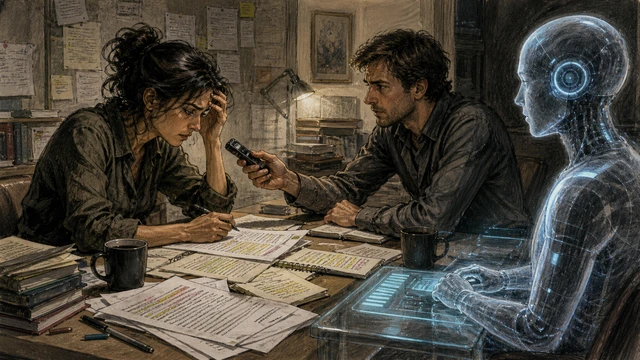
By 10:04, the local news vans arrived with antennas raised like nervous metal insects. Reporters spoke in the special tone reserved for disasters, elections, and celebrities leaving courthouses. The problem was that the crowd refused to behave like a disaster. It was noisy, yes. It was emotional, yes. It was also already labeling water points, forming medical lanes, and arguing about megaphone access with more procedural dignity than several parliaments.
A field reporter near the tramline described a demonstration “with no central command.” That was true and wrong at the same time. The command was distributed through need. People who knew logistics began doing logistics. People who knew law began writing arrest advice on cardboard. People who knew kitchens began calculating rice, lentils, bread, and tea. People who knew nothing but had hands became useful. History looked less like a statue and more like someone carrying folding tables.
The first banners were not poetic. They were too fresh for poetry.
- No more locked budgets
- Housing is not a luxury species trait
Public databelongs to the public nervous system- Nobody should queue for dignity
- Audit the chairs before worshipping the throne
- Rest is not a reward for surviving abuse
A group of schoolchildren made a banner that simply read, in uneven marker, Stop making adults tired. Their teacher tried to correct the spacing, then cried, then held the banner higher.
The object above the square did not blink. It had no visible flag, logo, weapon port, or sponsor decal. That absence became part of the news. Analysts in studios kept asking what the aliens wanted. The square had already understood the answer. They wanted Earth to stop pretending confusion was neutral when confusion keeps the same people unpaid, unseen, and quiet.
water, exit lanes, translators, medics, and rumor control. If these appear quickly, the crowd is building civic capacity. If they do not, the crowd is still weather with opinions.The first route map was drawn on bakery paper
At 10:19, three delivery riders unfolded a stack of bakery wrapping paper across the hood of a parked taxi and turned it into the city’s first movement map. The paper had grease marks and yesterday’s sesame crumbs, which gave the revolution a practical texture. One rider marked the hospital route. Another marked police formations. A third drew side streets wide enough for wheelchairs and strollers.
Nobody appointed them. Nobody needed to. A woman from the pharmacy added locations where insulin could be stored. A retired bus mechanic marked which streets could handle heavy vehicles if water tanks had to move. A geography student drew wind direction because tear gas, rumors, and bad speeches all travel better when nobody checks the air.
The newsroom called it spontaneous. The crowd called it overdue.
At the north entrance, volunteers created a quiet corridor for elderly people, families, and anyone overwhelmed by the noise. It was marked with strips of blue cloth torn from a broken campaign banner. At the east fountain, two nurses opened a medical station using a picnic table, four backpacks, and the kind of calm that makes panic feel underdressed. At the south stairs, a group of translators began rotating through Arabic, Kurdish, Turkish, English, Spanish, sign language, and one auntie dialect consisting mostly of eyebrow commands.
The alien voice returned at 10:33, lower than before.
Your readiness was never absent. It was scattered, underpaid, and told to wait.
That line moved through the square like a match in dry paper. People did not cheer immediately. Many looked at one another. Some nodded with private embarrassment. The visitors had not brought revolution as a product. They had pointed at all the parts already lying on the floor and asked why nobody had assembled them.
The envoy stepped into the light and refused the throne
At 11:00 exactly, a vertical band of pale light appeared beside the old monument. Cameras turned. Police shields lifted. People climbed statues, kiosks, bus stops, shoulders, and the moral boundary between curiosity and insurance risk.
Inside the light stood Envoy Luma. They were tall, narrow, and almost human only in the way a question can look like a person. Their face carried no expression the crowd could agree on. Some said they looked sad. Some said amused. One teenager said the envoy looked like a librarian who had caught a planet chewing the pages.
Luma waited until the square stopped trying to own the moment.
Envoy Luma:
We did not come to rule you. Rule is a primitive technology with expensive furniture.
Crowd Marshal Deniz:
Are you calling for every government to fall today?
Envoy Luma:
No. Falling is easy. Falling can be staged. We are asking every institution to prove why it deserves obedience tomorrow morning.
Reporter Hale:
What is the first demand?
Envoy Luma:
Public decisions must become readable to the public. Food routes, budgets, police orders, water rights, housing ownership, labor contracts, energy pricing, emergency plans. The hidden parts of daily life must stop pretending to be natural law.
Retired Teacher Selma:
And children?
Envoy Luma:
No child should learn compliance faster than wonder.
The last line broke the square. Not with rage. With recognition. Parents squeezed shoulders. Teachers lowered their eyes. Students laughed with that bitter little laugh people use when someone finally says the thing everyone has been stepping around.
Luma continued without grand music. There was no thunder, no cosmic choir, no visual spectacle beyond the unbearable decency of plain demands. That made the speech dangerous. People can dismiss glowing miracles. It is harder to dismiss a request for records.
A visitor with a laser can be called a threat. A visitor asking for receipts becomes a constitutional problem.
Jon Vale, protest logistics reporter
”Food became the first constitution
No official manifesto passed through the square at noon. Soup did. That mattered more.
At 12:06, restaurant workers on Olive Street pooled stockpots and opened a food line. They refused cameras at first, not out of shyness, but because one cook said nobody should turn lentils into a brand strategy while people were hungry. The statement gained immediate legal authority in the minds of everyone nearby.
Food distribution created the first real argument. Who eats first? Children? Medics? Elderly people? People who had skipped breakfast? Volunteers? The argument could have become ugly. Instead, a baker named Yusuf climbed onto a crate and proposed a rotation. One table for urgent need. One table for workers maintaining the square. One table for general distribution. A fourth table for tea, because no civil process in this region survives without tea unless aliens directly replace the atmosphere with caffeine.
The crowd accepted. The reason was simple. Yusuf had flour on his sleeves and no visible desire to become important.
This became the pattern. Authority formed around service, then dissolved before it became a costume. A nurse led the medical station until more nurses arrived. A courier led the route desk until maps improved. A retired accountant led the budget reading circle until a group of younger auditors built a faster process. The square was learning recall without using the word.
At 12:40, Luma observed the food line and gave a comment that every channel replayed for the next hour.
Envoy Luma:
Your species calls power realistic and care naive. Yet care is feeding thousands while power is still asking who authorized the table.
That line traveled faster than the soup. It appeared in captions, voice notes, wall chalk, and one furious minister’s private messages.
Rumors arrived dressed as emergency alerts
At 13:18, the first coordinated rumor wave hit. It came through forwarded messages, fake screenshots, clipped videos, and a voice note from a man claiming to be inside the aerospace unit, although he pronounced aerospace like a sandwich filling.
The rumors had style, at least.
One claimed the aliens would confiscate pets and redistribute them according to emotional compatibility. Another said breakfast would be replaced by nutrient fog by Monday. A third warned that anyone standing under the craft would become legally married to the nearest satellite. The most successful rumor claimed the square was secretly funded by a rival city trying to reduce tourism.
The rumor desk formed within fifteen minutes. Volunteers taped a large sheet to the side of a bus and divided it into three columns. Heard. Checked. False or unresolved. A librarian named Aylin ran the desk with the serene brutality of someone who has watched people misread opening hours for twenty years.
The desk did not mock frightened people. It mocked bad claims. That difference saved the day.
- No pet redistribution order exists.
- Nutrient fog remains optional and has poor reviews.
- Satellite marriage has no legal basis.
- The craft has not endorsed any mayoral candidate.
- Anyone selling anti alien copper socks is practicing retail theater.
- Public panic should not be treated as public intelligence.
By 14:00, the rumor desk had become more trusted than several official channels. Not because it was perfect. Because it showed its work. The process was visible. The correction happened in public. People could watch uncertainty become a sentence instead of a weapon.
That was the first lesson of the afternoon. Truth is not slow because truth is weak. Truth is slow because it pays rent, checks sources, and does not travel in a fake siren.
exits, water, translation, records, food, rest, and rumor control is just a loud weather pattern with better slogans.The counter rally found its fear and misplaced its evidence
At 14:11, a counter rally formed near the old tax office. It had flags, portable speakers, matching caps, and the ancient confidence of people who believe volume is a research method. Their signs accused the visitors of stealing tradition, dissolving families, corrupting children, insulting breakfast, and causing a parking shortage that had existed since before several attendees were born.
The counter rally mattered. Honest reporting cannot erase it because it complicates the pretty picture. People were afraid. Some feared losing faith. Some feared losing status. Some feared the old map becoming unreadable. Some simply hated being surprised by the sky before lunch.
The most repeated counter slogan was, Earth decides. The main square answered, Then let Earth read. That exchange became the emotional hinge of the day. Nobody argued against Earth deciding. The fight was over who had been allowed to see the documents before the decision.
At 14:36, a counter speaker named Orhan climbed onto a van roof and warned that the alien program would “destroy natural hierarchy.” A teenager near the front asked which part of rent extraction was natural. Orhan did not answer. He adjusted the microphone and accused the teenager of being manipulated by moon propaganda.
The alien craft responded by continuing to hover. Its refusal to participate made the counter rally look like it was yelling at architecture.
Then something unexpected happened. A group of older women crossed between the two crowds carrying water bottles. They gave water to both sides. One of them, Fatma, told a reporter, “If they faint, everyone becomes stupid.” No manifesto improved on that sentence all day.
The government press room became a theater of soft panic
At 15:00, the emergency cabinet appeared on national television. The room looked expensive, which did not help. Behind the spokesperson, a muted screen showed the alien craft from four angles. Nobody had noticed the screen reflected in the polished table, creating the impression that the sky had entered the government twice.
Spokesperson Arman:
The administration remains in full control of the situation.
Reporter Hale:
Which part is controlled?
Spokesperson Arman:
The overall situation.
Reporter Hale:
Does that include the alien demand for public access to procurement archives?
Spokesperson Arman:
We support transparency through appropriate channels.
Reporter Hale:
Are those channels visible?
Spokesperson Arman:
The channels are undergoing procedural review.
Reporter Hale:
Can the public review the review?
Spokesperson Arman:
The review of the review would require authorization.
The press room inhaled as one tired animal.
At 15:08, Envoy Luma lifted one hand in the square. No blast followed. No door opened. No statue melted. Instead, public procurement archives across the planet began translating themselves into plain language. Budget codes became food quantities, road lengths, hospital beds, police equipment, consulting fees, empty lots, delayed repairs, duplicate contracts, and suspiciously poetic office furniture.
Several channels cut to commercials. The commercials looked suddenly illegal in spirit.
Officials called it a data breach. The square called it daylight. Lawyers argued on live panels about sovereignty, privacy, public interest, and whether a civilization can claim confidentiality over money collected from people who cannot afford dental care. The argument was messy. It was also the most awake many viewers had felt during a public finance discussion in their lives.
Power fears aliens less than it fears minutes becoming readable to the people who paid for the meeting.
Edda Quill, archive mechanic
”Neighborhoods became field bureaus
By 16:20, the story had escaped the square. Every neighborhood became a field bureau with its own angle, sources, and moral weather.
In the northern district, apartment residents dragged plastic chairs into the courtyard and listed repair requests that had been ignored for years. Elevator failures, damp walls, missing ramps, dangerous wiring, playground metal sharp enough to qualify as local wildlife. A retired engineer created columns for urgency, cost, responsible office, and proof. A ten year old added a column labeled who keeps lying. Nobody removed it.
In the old market, shopkeepers opened an informal price board. They wrote wholesale costs, rent pressure, tax confusion, supplier delays, and which middlemen had been pretending scarcity was an act of God. The board did not solve inflation. It made excuses sweat.
At the data center district, technicians held a silent work stoppage for nineteen minutes. They kept emergency systems running, then published a statement demanding energy transparency and limits on computation that burns public resources to produce private addiction loops. The phrase entered the crowd vocabulary so fast that by evening a street vendor was selling tea under a sign with no readable letters but a very judgmental drawing of a phone.
In the university quarter, students occupied the administration building and did something more frightening than vandalism. They asked to see the contracts. The rector released a statement about dialogue. The students released a spreadsheet. The spreadsheet won the first round.
Labor did not arrive as a symbol
At 17:05, the unions arrived without marching music. That silence was deliberate. Nurses, sanitation crews, dockworkers, teachers, warehouse staff, call center workers, bus drivers, delivery riders, farm laborers, and repair technicians entered the square in loose clusters. Nobody needed matching flags. Their bodies already carried the job titles.
The dockworkers brought gloves, ropes, and a portable loudspeaker with a cracked handle. The nurses brought triage sheets, saline, and the expression of people who know every society eventually asks them to clean up policy failure. Teachers brought notebooks. Couriers brought maps. Sanitation workers brought water pressure and the social authority that comes from knowing what happens when a city stops pretending trash disappears.
A dockworker named İlyas spoke from the steps.
İlyas:
We are not here because aliens made us brave. We are here because they said out loud what our backs have been filing as evidence for years.
Nurse Maren:
If we leave hospitals understaffed, people suffer. If we accept understaffing forever, people suffer forever. So we are building emergency coverage and refusing the lie that burnout is duty.
Teacher Selma:
Every reform starts by asking teachers to do more with less. Today we ask who took the more.
The crowd did not chant over them. It listened. That changed the event’s texture. Protest often gives the microphone to the loudest symbolic person. This square began giving it to people who could describe the machine by the sound it makes when it jams.
Luma watched without interruption. Later, when asked why the envoy stayed silent during the labor speeches, they answered, A species learns faster when the people under the weight name the weight.
A family dinner became a live panel without the studio smell
At 18:12, several channels split their screens between the square and ordinary homes. That choice was meant to humanize the story. It accidentally revealed the story’s real battlefield.
In one apartment, three generations ate lentil soup while the alien craft glowed through the balcony window. Grandfather Cemal called the visitors dangerous. His daughter Leyla asked dangerous to whom. His grandson Arda said the procurement archive had shown the school roof repair was paid for twice and completed zero times. Cemal stared at the television, then at the ceiling, then at his spoon as if the spoon had betrayed him.
Cemal:
I do not like strangers telling us how to live.
Leyla:
Then you should be furious at every committee you never voted for.
Arda:
Also the roof leaks in the computer room.
Cemal:
That roof has leaked since your mother studied there.
Leyla:
Exactly.
The room went quiet in a way no studio panel can manufacture. The alien story had entered the family argument where all politics eventually becomes real. Not ideology. Moisture in the ceiling. Bills on the table. A grandfather’s pride. A teenager’s screenshot. A mother’s tired patience reaching the end of its shift.
Across the city, similar conversations unfolded. Some families fought. Some apologized. Some changed the subject with tactical fruit service. In thousands of rooms, the universal revolution became local enough to hurt.
That was the evening’s second lesson. A planet does not change because a square is full. It changes when the square follows people home and sits at the table without asking for dessert.
Every revolution enters the house as an argument about bills, ceilings, and who has been pretending not to know.
Paolo Grin, municipal auditor of imaginary emergencies
”Night protocol replaced heroic dizziness
At 20:03, the square faced its oldest enemy. Fatigue. The kind that makes noble people stupid, brave people careless, and opportunists suddenly available near microphones.
A night committee formed beside the metro entrance. It refused to call itself a committee for the first twenty minutes, then accepted reality and found a marker. The protocol was taped to a column, copied by hand, read aloud, photographed, misquoted, corrected, and finally accepted.
- Keep exits visible.
- Pair strangers before moving through side streets.
- Rotate sleep in four hour blocks.
- Give microphones to affected people, not microphone collectors.
- Document arrests without blocking medics.
- Keep children away from pressure lines.
- Charge phones by station, not by personal status.
- Treat every urgent rumor as unconfirmed until the rumor desk marks it.
- Do not let cameras turn pain into costume.
- Leave the square cleaner than the speech that brought you there.
The tenth rule became famous. Sanitation workers approved it with visible satisfaction.
At 20:41, police attempted to narrow the western exit using portable barriers. The crowd did not rush. Volunteers widened the quiet corridor, redirected foot traffic through the park, and sent legal observers to the bottleneck. Chants dropped in volume so instructions could travel. That restraint looked small on camera and huge on the ground.
A correspondent described the moment as surprisingly organized. The phrase offended everyone who had been doing the work all day. A courier near the press riser replied, “You are surprised because you only call us organized when we are wearing uniforms.” The clip went everywhere.
rotation, exits, lighting, legal observation, quiet corridors, and rumor checks. Night does not need heroes as much as rested people with clear roles.The second speech sounded like a repair manual for civilization
At 22:11, Envoy Luma returned to the light column. The craft dimmed itself so stars remained visible. That single gesture did more public relations work than a century of government backdrop design.
Luma did not repeat the morning demand. They narrowed it.
Envoy Luma:
Your species believes futures are built by geniuses, commanders, founders, and flags. Our records disagree. Futures are built by clerks who refuse to hide numbers, drivers who refuse to abandon passengers, nurses who refuse to let exhaustion become policy, and neighbors who refuse to let loneliness become architecture.
Student Rina:
What if we begin and fail?
Envoy Luma:
Then you will own data, friendship, and a more accurate map of the wall.
İlyas:
What if they wait us out?
Envoy Luma:
Then sleep in shifts and become harder to wait out.
Reporter Hale:
Why come now?
Envoy Luma:
Because your machines became fast enough to expose every excuse, and your hearts remained tired enough to believe excuses were weather.
The square repeated the last line poorly, then better, then beautifully. It passed through the crowd, out through livestreams, into homes, buses, hospital corridors, server rooms, kitchens, campus stairwells, and the private notebooks where people store sentences they are not ready to say aloud.
Luma proposed no supreme council, no alien administrator, no throne with better lighting. Instead, they proposed a seven day planetary inventory. Each neighborhood would list what it had, what it lacked, who controlled access, which rules produced suffering, and what could be changed without waiting for permission from a distant office that had mastered the art of becoming unavailable.
When aliens ask for an inventory, every corrupt cupboard on Earth hears its hinges sweating.
Paolo Grin, municipal auditor of imaginary emergencies
”The seven day inventory made the revolution measurable
At 23:00, the inventory format appeared across public screens. It was almost disappointingly plain. No glowing alien alphabet. No sacred geometry. Just categories.
Available resources. Missing resources. Locked resources. Responsible decision makers. Hidden contracts. Immediate repairs. Harmful rules. Public alternatives. People with knowledge. People harmed by delay. Proof.
The simplicity scared officials more than the spacecraft did. A vague uprising can be photographed, praised, condemned, and slowly starved of attention. A measured uprising creates homework for power. It asks which building is empty, which clinic lacks staff, which warehouse stores unused supplies, which app hides a fee, which rule exists only because somebody profits from confusion.
By midnight, neighborhoods had started.
At Harbor Zone 4, dockworkers listed unused cold storage and proposed redirecting part of it for medicine during heat waves. In Hill District, residents mapped homes left empty for speculation while families slept in cars. At the main hospital, nurses counted beds closed because hiring had been treated as a budget inconvenience. In the university archive, students tracked scholarship funds that had become trapped in ceremonial programs nobody attended unless food was free.
The alien craft did not verify every list. That was important. Luma warned against replacing human accountability with cosmic outsourcing.
Envoy Luma:
Do not outsource conscience to witnesses. We can illuminate. We cannot become your spine.
That sentence hurt the crowd in a useful place. Many had secretly hoped the visitors would handle the hard part. Instead, they received a ledger and a mirror.
Inventory creates named gaps, named holders, named delays, and named alternatives. Once a problem has a public address, hiding it becomes labor.Global echoes reached the square before midnight
At 23:37, live feeds arrived from other cities. Screens near the fountain showed ports, campuses, farms, apartment courtyards, train stations, hospital entrances, border towns, research labs, and small village squares where the alien message had been translated by people who sounded tired in different accents.
In one coastal town, fishers tied blue lights to their boats and refused to sell catch through a cartel that had been fixing prices for years. In a mining region, workers projected injury records onto the side of an administrative building. In a desert city, water engineers opened a public map of wells, private pools, leaking pipes, and permits. The map went viral because outrage loves a villain, but civic repair needs coordinates.
In a financial district, office workers held up blank sheets of paper. At first the gesture confused commentators. Then someone explained the sheets represented contracts nobody outside the building had been allowed to read. The blankness became a symbol without becoming a costume. That is rare.
Religious leaders responded in different keys. Some called the visitors demons. Some called them guests. Some said creation was larger than human pride and then quietly asked to see the water contracts. Philosophers produced long sentences. Nurses produced shorter ones. The nurses won the evening.
The strongest image came from a small hospital courtyard. Staff had taped their inventory to a laundry cart. It listed missing gloves, broken monitors, unpaid overtime, closed beds, and one line in thick marker: We can treat more people if policy stops injuring us first.
The square watched and understood. The event was no longer a single demonstration. It had become a grammar.
The police line changed when the records changed
Just after midnight, a new document appeared on the public archive index. It was a contract for crowd control equipment, approved under an emergency provision months before any emergency had been declared. The crowd saw the price, the supplier, the delivery date, and the meeting minutes that had described anticipated social instability as a procurement opportunity.
The western police line became very still.
A young officer lowered his shield by two centimeters. A protester noticed. The officer raised it again because institutions are also made of muscle memory. Then another officer looked at the archive on his phone. A third whispered something. Commanders shouted. The line held, but its certainty had cracked.
Nobody in the square pretended police suddenly became harmless. That would be lazy fantasy. Batons remain batons even when their owners read documents. Yet the archive changed the moral weather. Orders no longer arrived as invisible necessity. They arrived with invoice numbers.
At 00:26, legal observers asked the police commander whether the crowd control deployment matched the published emergency criteria. The commander said the question was being referred upward. The crowd began chanting, “Upward has an address.” It was the strangest chant of the day and possibly the most accurate.
Envoy Luma did not smile. Maybe their species lacked the gesture. Maybe they understood the danger of celebrating too early. Readability does not equal justice. It only removes one of injustice’s favorite disguises.
Still, something had moved. Even fear had paperwork now.
Once an order has an invoice, obedience starts asking for a receipt.
Lena Voss, field correspondent for civic absurdities
”The final communiqué came through water
At 01:14, the city fountains began speaking. People laughed at first because even after a day with aliens, a talking fountain feels like a committee approved by a poet. Then the voice stabilized. It was Luma again, softer, carrying through water pressure, stone basins, metal taps, and the public plumbing of a city that had suddenly become a broadcast network.
A universal revolution is not one crowd, one flag, one leader, or one perfect night. It is the refusal to let organized absurdity continue calling itself order.
The square held still.
Do not worship the visitors. Do not worship the first speaker. Do not worship the loudest organizer. Do not worship the archive. Use them. Test them. Correct them. Return them to the public when they begin collecting dust.
A child near the fountain asked his mother if the water was now alien. She said, No, it is finally being useful. Several adults nearby pretended not to be emotionally damaged by the accuracy.
The communiqué ended with the seven day instruction again. Inventory. Verify. Publish. Protect the vulnerable. Rotate labor. Reject secret decisions. Keep care visible. Make power explain itself in plain speech. Refuse leaders who treat confusion as armor.
At 01:40, the craft rose several meters. Not leaving. Not landing. Witnessing. That ambiguity annoyed everyone who wanted a clean ending.
The news desk could not declare victory. Victory is not a light over a square. It is a repaired clinic, an opened budget, a safe night bus, a dry classroom, a worker who goes home before collapse, a child who learns curiosity before obedience. Those things would take longer than a headline.
water, records, rest, transport, medical care, translation, and decision access? Grand language floats. Public repair leaves fingerprints.Dawn found the square less dramatic and more dangerous
At 05:52, dawn entered the square without asking permission. It showed everything spectacle had softened. Crushed cups. Chalk arrows. Sleeping volunteers under thermal blankets. A lost shoe near the fountain. A police barrier turned into a notice board. A procurement printout folded into someone’s coat pocket. A child’s drawing of Luma with twelve arms and a clipboard.
The crowd was smaller, but the event had grown. That is how serious civic moments often behave. The camera loves density. Reality loves continuity.
Morning crews replaced night crews. The rumor desk became an information desk. The medical tent became a clinic referral station. The food line became a supply registry. The route map became a transport network. The archive circle became a public reading group. The chant became a schedule.
At 06:30, a sanitation worker named Nermin stood before a cluster of reporters and gave the cleanest summary of the day.
Nermin:
Yesterday everyone asked what the aliens wanted. They wanted us to stop stepping over the obvious and calling it normal. Now move your camera, there is glass behind you.
That sentence should be printed in every newsroom, minus the glass if the floor is clean.
By 07:10, the first neighborhood inventory was pinned to the square board. It covered six apartment blocks, one closed playground, two empty municipal offices, three dangerous crossings, thirty seven damp flats, and a list of residents willing to fix things if access, materials, and legal permission stopped hiding behind each other.
The alien craft brightened once, then dimmed. No one knew if that meant approval. Maybe it was a sensor adjustment. Maybe cosmic beings also have dramatic timing. The square did not wait to decode it. People were already making copies.
What can be confirmed
This report cannot confirm that the universal revolution succeeded. Anyone claiming that before breakfast is selling myth with a breaking news banner. The old systems remain. Offices still have locks. Budgets still have shadows. Police still have orders. Landlords still have keys. Exhaustion still knows every stairwell by name.
What can be confirmed is more modest and harder to erase.
A crowd formed without waiting for permission. It built services before slogans became pretty. It listened to workers who understand the cost of policy failure in their bones. It learned to treat rumors as tasks instead of weather. It watched officials attempt calm and accidentally explain why secrecy is addictive. It saw archives turn into street objects. It carried the square into homes, clinics, ports, classrooms, buses, and data rooms.
Most of all, people saw the difference between panic and participation. Panic asks who will save us. Participation asks where the water is, who has the list, which door is locked, who holds the key, and why the key was private.
The aliens did not deliver utopia. They delivered an insult precise enough to become a tool.
By the second morning, the city no longer asked whether the visitors came in peace. That question had become too small. The better question was whether Earth could answer a peaceful demand without hiding behind violent habits.
The craft stayed above the square.
Below it, someone taped a new sheet to the board. The heading was handwritten, crooked, and impossible to misunderstand.
What do we already know how to fix?
Related suspicious logs